 Skip to Content


When a Commercial Real Estate Loan Lands in Special Assets
 By: Craig Goddy, Esq.
A commercial real estate loan rarely becomes distressed overnight. Payments may begin arriving late. A major tenant leaves. Required financial reporting stops. Property taxes or insurance become an issue. A refinancing or sale does not materialize as expected.
Thereafter, the loan ends up on the dreaded “Lender’s Watch List.”
In the current commercial real estate environment, we are starting to see a rise in delinquencies. These warning signs can quickly change a loan’s risk profile. When a Florida commercial real estate loan moves to special assets, the lender’s early decisions can significantly affect the options available later.
What Happens When a Florida Commercial Real Estate Loan Goes to Special Assets?
Foreclosure may ultimately be necessary, but it is rarely the only consideration. A workout or forbearance agreement is almost always preferable to taking legal action. However, that option depends heavily on the borrower’s level of cooperation and the willingness of the lender’s loan committee or oversight management.
If litigation is needed, a commercial receivership may be effective if rents are being misapplied or the property is at risk of significant deterioration. Foreclosure will ultimately provide the path to recovery, but foreclosure suits take time to complete, and the fight oftentimes comes down to the personal guaranties.
Borrowers may be willing to immediately turn over the property to the lender, but they are looking to be relieved from personal liability on the loan. Without the property, they lose leverage to negotiate a resolution of the personal guaranty. That fight can often lead to a lengthy (and expensive) foreclosure process that may include a bench trial.
Receivership becomes a good option so that the lender can receive the rents and apply them to the delinquent loan. The right approach depends on the loan documents, the type and condition of the collateral, borrower cooperation, the presence of guaranties and the specific challenges underlying the delinquency.
Start With the Commercial Loan Documents
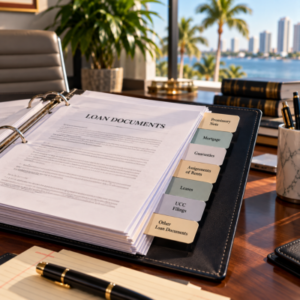 Before choosing a remedy, determine exactly what rights the lender has. The promissory note, mortgage, guaranties, security agreements, assignments of rents and leases, UCC financing statements and other loan documents should all be reviewed together.
Key questions include what type of default has occurred (monetary versus non-monetary), what notice or cure requirements apply, what property secures the debt, who guaranteed the obligations and whether additional liens or encumbrances currently affect the collateral.
The goal is to understand the lender’s legal position before deciding how to proceed. Certain notices may be required to be provided to the borrower, the guarantors and occasionally to third parties.
Reassess the Commercial Real Estate Collateral
The lender’s understanding of the property at loan origination may no longer reflect current conditions. Updated title and UCC searches may reveal intervening liens, judgments or other interests. A title search is a requirement of the foreclosure process, so ask your attorney to obtain an updated title search.
The lender should also consider the current property value and condition, tenant occupancy rate, upcoming lease expirations, operating income, taxes, insurance, CAM and maintenance costs. This likely will require the commercial lender to go to the property and “take a look around.”
A broker price opinion may also be worth obtaining in deciding whether to foreclose or enter into a forbearance agreement. For income-producing property, tenant changes can materially affect the analysis. A building that was substantially occupied at origination may present a very different recovery picture after losing a significant tenant.
Special assets teams need to understand what they are protecting today rather than relying solely on the original underwriting. Again, the lender probably needs to send someone to inspect the property.
Review Assignments of Rents and Leases
Rental revenue is particularly important when an income-producing property becomes distressed. Section 697.07, Florida Statutes, addresses assignments of rents and sets forth the court’s and the lender’s responsibilities. That section provides that a properly recorded assignment made as part of a security interest creates a lien on the rents. Unless otherwise agreed in writing, Florida law also provides a mechanism for enforcement following default after issuance of a written demand.
Lenders should understand who is collecting the rents, whether tenants are current, whether leases have been modified and whether significant termination rights or expirations are approaching. Often, lenders lack this information because it was not collected or updated regularly before default. This information should be requested as soon as the borrower begins having payment issues and while there is still a relationship between the lender and borrower.
Evaluate Personal Guaranties
Guaranties can significantly affect the lender’s recovery strategy. When a loan becomes distressed, lenders should review who guaranteed the debt, whether the guaranty is limited or unlimited, what obligations trigger liability and whether contractual notice requirements apply.
The guarantor’s current financial condition also matters. Lenders may wish to review recent financial statements, personal and business tax returns, liquidity, net worth and contingent liabilities. This may also include running a current credit report on the guarantors. A viable guaranty may change how the lender evaluates a workout, foreclosure or other collection strategy.
What Are a Florida Lender’s Options for a Distressed Commercial Loan?
Not every troubled loan should proceed immediately to foreclosure. A forbearance agreement, loan modification, additional secured collateral or enhanced reporting requirements may give a viable borrower time to stabilize a property while protecting the lender’s position.
The critical question is whether the proposed solution addresses the reason the loan became distressed. A temporary cash-flow problem differs from a property that has lost a major tenant, experienced a significant decline in performance or accumulated additional liens. Giving a borrower additional time without addressing the underlying problem may leave the lender in a weaker position later.
When Should a Florida Lender Consider a Receiver?
When the property itself or its income stream is at risk, receivership may become part of the strategy. Florida’s Uniform Commercial Real Estate Receivership Act provides the framework for commercial real estate receiverships.
A receiver can provide neutral, court-appointed management to preserve property, protect income and address potential waste or mismanagement. Receivership also carries costs and requires court oversight, factors lenders need to weigh as part of the overall recovery strategy.
However, collecting rents and applying them to the defaulted loan is always better than having those rents go into the borrower’s pocket. Under Section 714.06, Florida Statutes, a court may appoint a receiver when property or its revenue-producing potential, is in danger of waste, loss, substantial diminution in value, dissipation or impairment.
Depending on the court’s order, a receiver may be authorized to collect and control receivership property, protect it and operate any business associated with it. Section 714.12, Florida Statutes. For a lender facing deteriorating collateral, disappearing rents or management concerns related to the borrower, a receiver can be vital to preserving the collateral’s value.
When Does Commercial Foreclosure Become Necessary?
 When a consensual resolution is not appropriate or fails, foreclosure may become necessary. But the lender should evaluate the entire recovery picture. The lender’s rights may extend beyond the real property to rents, personal property collateral and the guarantors. Florida’s Uniform Commercial Code also provides remedies for secured creditors following default involving certain personal property collateral.
The lender may have an interest in inventory, receipts or revenue from businesses owned by the borrower located within the secured real property. Under Section 679.601, Florida Statutes, a secured party may, subject to applicable law, reduce a claim to judgment, foreclose or otherwise enforce its security interest through available judicial procedures.
The right strategy depends on the loan documents, collateral, lien priorities, borrower and guarantor circumstances and the lender’s business objectives.
Early Action Can Preserve a Lender’s Recovery Options
The earlier a lender evaluates a troubled commercial real estate loan, the more opportunity it may have to protect its position. Warning signs that should trigger prompt review may include missed or late payments, nonpayment of property taxes or insurance, unexplained drops in rental income, vacancies or the sudden departure of key tenants, lapses in required reporting and failure to maintain the property.
That is why getting updated financials from the borrower is not just a compliance issue but should be viewed as essential to maintaining a healthy portfolio. Waiting can have consequences. Rents may be diverted. Tenants may leave. Collateral may deteriorate. Additional creditors may enter the picture.
For special assets teams, the important questions are straightforward: What is owed? What secures the debt? What has changed since origination? What rights does the lender have under the loan documents and Florida law? Which strategy best protects the lender’s recovery?
Bottom Line
Henderson Franklin’s Business Litigation attorneys represent lenders, financial institutions and other creditors in commercial loan workouts, foreclosures, receiverships and creditor-rights matters throughout Florida.
If a commercial real estate loan is showing signs of distress, early review can help preserve options before circumstances limit them. I welcome the opportunity to discuss the loan, collateral and potential recovery strategies. I may be reached at craig.goddy@henlaw.com to schedule a consultation.