 Skip to Content


What Florida Employers Need to Know About AI in Hiring and Recruiting
 By: Scott Atwood, Esq.
Artificial intelligence is changing how employers find and evaluate job candidates.
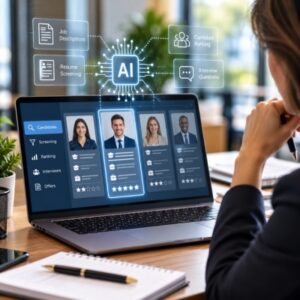
Recruiting platforms may use automation to screen resumes, rank applicants or identify candidates who appear to match a position. Employers may also use generative AI to prepare job descriptions, develop interview questions or organize applicant information.
These tools can save time, particularly when an employer receives hundreds of applications. But using AI in hiring does not transfer responsibility for employment decisions to the technology or the vendor providing it. Employers should understand how artificial intelligence is being used in their recruiting process and where legal risks may arise.
How Is AI Being Used in Hiring?
AI may enter the hiring process without an employer deliberately deciding to “use AI.”
An applicant tracking system or recruiting platform may already incorporate automated features. A hiring manager may use an AI tool to compare resumes against a job description. Another employee may ask AI to identify the strongest candidates from a group of applications.
Common uses can include:
- drafting job descriptions and recruiting materials;
- screening resumes;
- ranking applicants;
- identifying candidates based on selected criteria; and
- preparing interview questions.
The important question for employers is not simply whether AI is involved. It is how the technology affects who advances through the hiring process.
Could AI Hiring Tools Screen Out Qualified Applicants?
Employers should be cautious about criteria used by AI-assisted hiring tools. A system may appear objective because a computer is applying the criteria, but the result can depend on the data, instructions and assumptions underlying the process.
For example, an employer should consider whether a screening tool could disadvantage a qualified applicant because of age, disability, race or another protected characteristic.
Employers should also consider accessibility. If an automated application or assessment creates barriers for individuals with disabilities or does not allow an applicant to request a reasonable accommodation, the technology can create employment law concerns before an interview ever occurs.
Employers Remain Responsible for Hiring Decisions
Using a third-party recruiting platform does not mean an employer should automatically accept its recommendations.
If a system ranks one applicant above another, HR professionals and hiring managers should understand what factors contributed to that result. Before relying on an AI-assisted hiring tool, employers should consider asking:
- What information does the tool evaluate?
- What criteria are used to screen or rank applicants?
- Has the tool been evaluated for potential bias?
- Can an applicant request an accommodation?
- Does a person review the results before eliminating a candidate?
A recommendation generated by technology should not replace thoughtful human review.
What About AI-Generated Job Descriptions and Interview Questions?
AI can help draft job descriptions and interview questions, but the resulting content should be reviewed before use. A job description should accurately reflect the position and its essential functions. Interview questions should be appropriate for the position and consistent with applicable employment laws.
An AI-generated question may sound professional while still creating a legal problem. The person conducting the interview remains responsible for what is asked. The same principle applies throughout the hiring process: AI may assist with the work, but people remain responsible for the employment decision.
Review the Technology Your Vendors Are Using
Employers should know whether outside recruiting, applicant tracking or assessment vendors use artificial intelligence or automated decision-making tools.
Ask vendors what the technology does, what information it considers and how it generates results. Employers may also want to understand how applicant information is stored, whether it is shared with other systems and what safeguards are in place.
Do not assume that purchasing a technology product also transfers the employer’s compliance obligations to the vendor.
The Bottom Line
Artificial intelligence can speed up recruiting and help employers manage large applicant pools, but speed should not replace careful decision-making.
Employers using AI in hiring should understand how candidates are screened, review automated recommendations and maintain human oversight before making employment decisions. HR professionals should also periodically review the AI-enabled tools their organization and outside vendors use as technology continues to evolve.
If your organization is evaluating AI recruiting tools or reviewing its hiring practices, I may be reached at scott.atwood@henlaw.com.