 Skip to Content


New Florida Law Expands Local Authority Over Vessels and Anchoring
 By: Amanda Ross, Esq.
Florida continues to refine how it manages its waterways, and a newly signed law will directly impact vessel owners, waterfront property owners, and local governments across the state.
Governor Ron DeSantis recently signed CS/CS/HB 1103 into law, with an effective date of July 1, 2026. The legislation introduces meaningful changes to how derelict and nuisance vessels are addressed, while also expanding local authority over boating safety.
What the Law Does
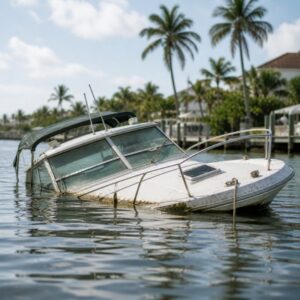
At its core, the law shifts more responsibility and authority to counties and municipalities. Local governments may now adopt ordinances that allow their code enforcement officers to take action on vessels that are:
- At risk of becoming derelict;
- Classified as public nuisance vessels; and,
- Violating long-term anchoring requirements.
Once authorized by local ordinance, these officers can issue noncriminal citations using Florida’s uniform boating citation system.
This represents a notable change. Previously, enforcement was more centralized through state agencies. Now, local jurisdictions have a more immediate tool to address problem vessels before they create safety or environmental concerns.
Important Check on Local Authority
Local control is not unlimited. Before any ordinance takes effect, it must be reviewed and approved by the Florida Fish and Wildlife Conservation Commission (FWC). The FWC is also responsible for establishing rules governing the implementation of these ordinances.
This approval requirement is intended to maintain consistency statewide while still allowing flexibility at the local level.
Expanded Enforcement Tools for Nuisance Vessels
The law also reinforces the consequences for repeat violations. A vessel that accumulates multiple violations within a defined period may be deemed a public nuisance and subject to removal, relocation or disposal.
For waterfront communities, this creates a clearer pathway to address vessels that have long been a source of frustration, particularly those abandoned or left in deteriorating condition.
New Authority to Address “Blind Corner” Safety Risks
In addition to anchoring and nuisance vessel provisions, the law gives local governments new authority to improve boating safety. Counties and municipalities may now adopt ordinances regulating vessel speed and operation near blind corners, narrow channels, and areas with obstructed visibility.
These restrictions can extend up to 1,000 feet where necessary to ensure safe navigation, provided the areas are properly marked in accordance with FWC rules. For heavily trafficked or geographically complex waterways, this offers a practical way to reduce collision risks.
What This Means in Practice
This law signals increased local oversight and a greater likelihood of enforcement at the community level. Waiting until a vessel becomes derelict is no longer a safe approach.
For waterfront property owners, the change offers a more responsive process for addressing abandoned or hazardous vessels that affect access, safety, and property values.
For local governments, the law provides tools—but also responsibility. Ordinances must be carefully drafted, justified, and approved before enforcement begins.
Bottom Line
CS/CS/HB 1103 reflects a broader shift toward local management of Florida’s waterways, with oversight from the state to ensure consistency and safety.
Communities now have more authority to act, but with that authority comes the need for thoughtful implementation.