 Skip to Content


EEOC Proposes Ending EEO-1 Reporting Requirements for Large Employers
By: Scott Atwood, Esq.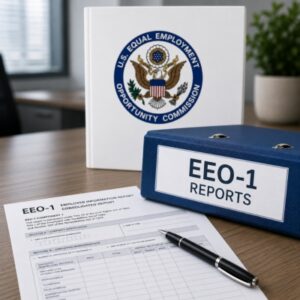
Employers with more than 100 employees are familiar with the annual obligation to file EEO-1 reports with the U.S. Equal Employment Opportunity Commission (“EEOC”). That long-standing requirement, however, may soon change.
On May 14, 2026, the EEOC submitted a proposal to the White House seeking to eliminate EEO-1 reporting requirements, along with certain reporting obligations tied to the Americans with Disabilities Act (“ADA”), the Pregnant Workers Fairness Act (“PWFA”), and the Genetic Information Nondiscrimination Act (“GINA”).
What Is EEO-1 Reporting?
EEO-1 reporting has existed for nearly 60 years and requires covered employers to submit workforce demographic data, including information related to race, ethnicity, gender, and job categories. The reporting process has long been used by the federal government as part of its enforcement and data collection efforts involving workplace discrimination laws.
When Could EEO-1 Reporting Requirements End?
At this stage, it remains unclear when — or if — the reporting requirements will officially end. Federal rulemaking procedures can take significant time, meaning employers may still be required to complete 2025 reporting obligations.
EEOC Reporting Portal Remains Uncertain for 2025 Filings
Notably, the EEOC has not yet opened the online reporting portal for 2025 submissions. In prior years, the portal typically opened in late May for a limited filing window. During the first Trump administration, the EEOC delayed opening the reporting portal until litigation prompted action, creating uncertainty for employers attempting to comply with filing deadlines.
Until formal guidance is issued, covered employers should continue preparing for potential 2025 filing obligations and monitor EEOC announcements closely.
Bottom Line
The proposal serves as another example of rapidly changing federal employment law priorities under the Trump administration. Employers should periodically review workplace policies, compliance procedures, and internal reporting practices to ensure they align with current agency guidance and enforcement trends. Employers needing assistance may reach me at scott.atwood@henlaw.com to schedule a consultation.